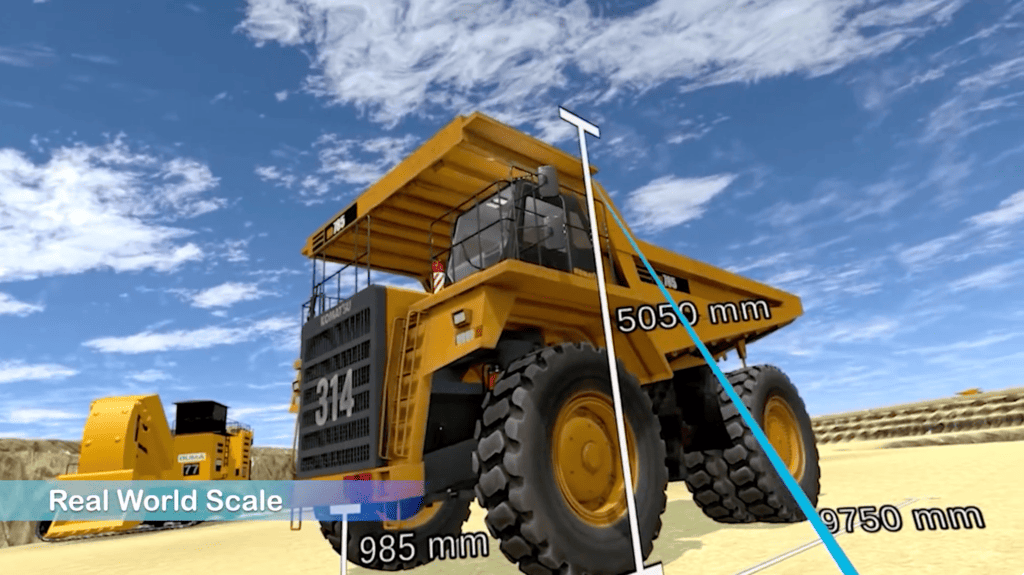
Standing next to a loaded haul truck is an experience in pure vibration. The tyres alone dwarf a grown adult. High up a narrow ladder, a cabin packed with switches, gauges, and levers waits for a human to bring 200 tonnes of steel to life.
Handing the keys to a rookie who has never stepped inside that cabin is a massive liability. This is the bottleneck Virtu addresses. Their VR-based heavy equipment training is moving from a “tech luxury” to a core onboarding requirement across the mining sector.
The Failure of Traditional “Checklist” Training
Conventional operator training usually involves pairing a “green” trainee with a veteran. You hand them a clipboard, a checklist, and hope for the best during those first few shifts. The stakes are catastrophic. We are talking about excavators and dump trucks weighing between 30 and 400 tonnes. A single mistimed lever pull doesn’t just stall the machine; it can flip a loaded hauler, wreck a haul road, or kill ground personnel.
Then there’s the mechanical reality. Starting a heavy mining unit isn’t like starting a truck. Some engines require a 20-step sequence just to reach idle safely. Skipping a step means hydraulic cavitation or engine damage that costs six figures to repair. Conventional methods can’t compress this learning curve without gambling on safety.
The Virtu Framework: Four Levels of Competence
Virtu doesn’t dump people into a driving seat immediately. The curriculum is a structured four-module climb:
- Component Recognition: Trainees study a full-scale 3D anatomy of the vehicle. They learn where the engine block, transmission, and hydraulic cylinders live before they ever touch a control.
- The Walkaround Inspection: This builds the “pre-shift habit.” In VR, trainees circle the machine, opening panels to check fluid levels, belt tension, and tyre integrity. They learn to spot wear without the pressure of a ticking clock.
- Cabin Familiarisation: This is where the sensory overload happens in real life. Virtu recreates every joystick, rocker switch, and digital display. Trainees can toggle every control until the layout is muscle memory.
- Operational Simulation: The final stage—loading, hauling, and dumping in a physics-based mining environment.
Data Over “Gut Feeling”
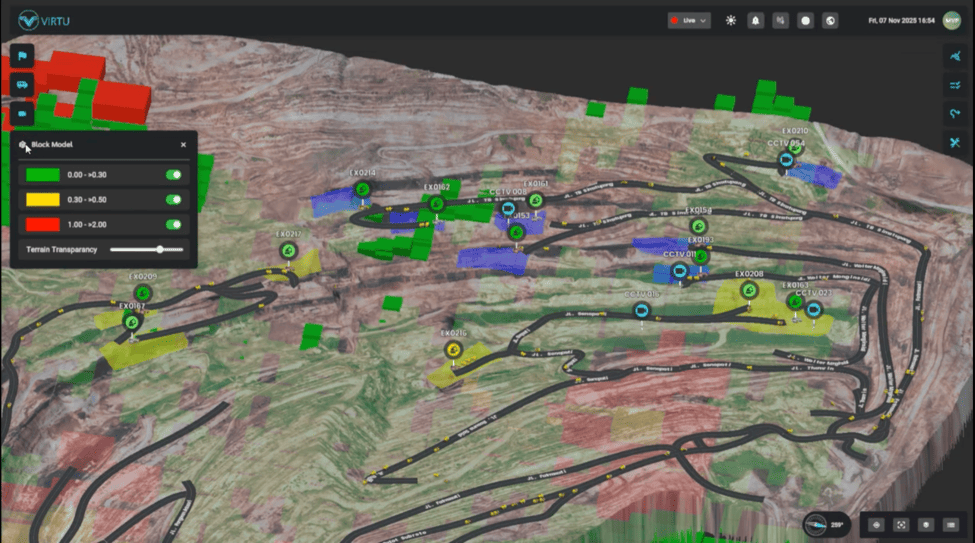
What separates Virtu from a generic simulation is the backend Administrator Dashboard. Every action—from the sequence of walkaround checks to the smoothness of a loaded turn—is logged and scored.
Supervisors no longer have to shadow a trainee for eight hours. They pull the data, see the scores, and identify exactly who is struggling with specific procedures. It moves the conversation from “I think he’s ready” to “The data shows he’s ready.”
The Industrial Bottom Line
The result is clear: faster onboarding, fewer mechanical incidents, and operators who have already made their rookie mistakes in a virtual pit. For mining firms where downtime is a profit-killer, Virtu’s VR training provides a “safe-to-fail” environment that live equipment simply cannot offer.