Traditional safety drills in Indonesia often suffer from a “spectator problem.” Whether it’s fire safety or first aid, the typical group format means 90% of the trainees are standing around watching one person act. In a real crisis, this creates a dangerous hesitation—the bystander effect. VGLANT (a member of VIRTU) dismantles this passivity by placing the trainee at the center of a high-fidelity, single-responder environment.
1. Fire Safety: The “Live” Digital Crucible
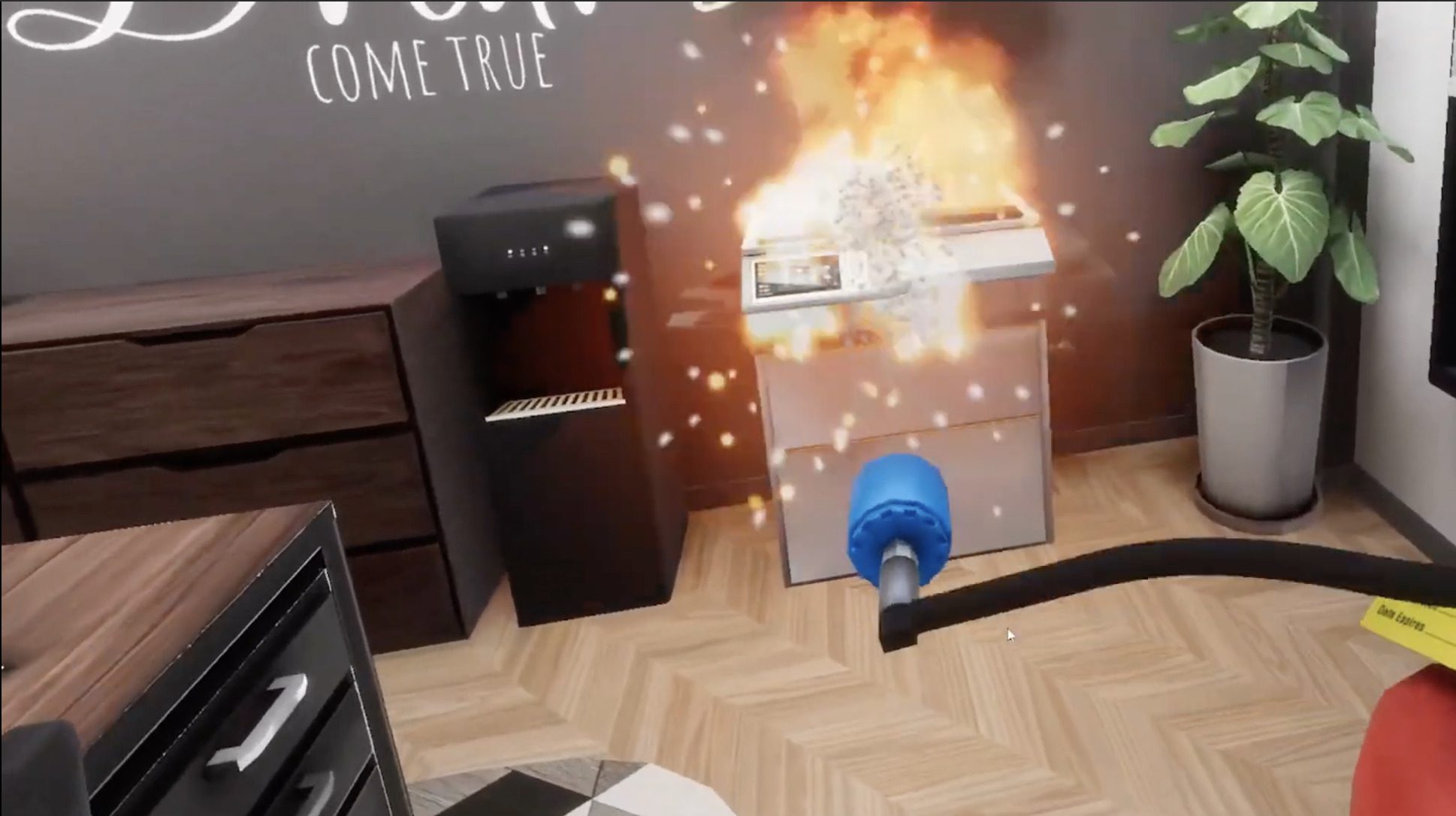
Conventional fire drills are limited by safety red tape and cost. You can’t exactly light an office on fire to see if your employees can handle it. VGLANT’s VR platform removes these barriers, allowing for “Zero Risk” immersion in scenarios that would be impossible to stage physically.
- Hazard Detection: Trainees don’t just fight fires; they learn to spot the invisible risks before the first spark.
- The Fire Cycle: The simulation tracks the progression from the first appearance of smoke to the decision-making process of choosing the correct APAR (Fire Extinguisher).
- Physics-Based Fire: The virtual fire doesn’t follow a script. It spreads based on the trainee’s actions—or inactions—forcing genuine accountability for every move.
2. The Fire Extinguisher (APAR) Module: Muscle Memory Matters
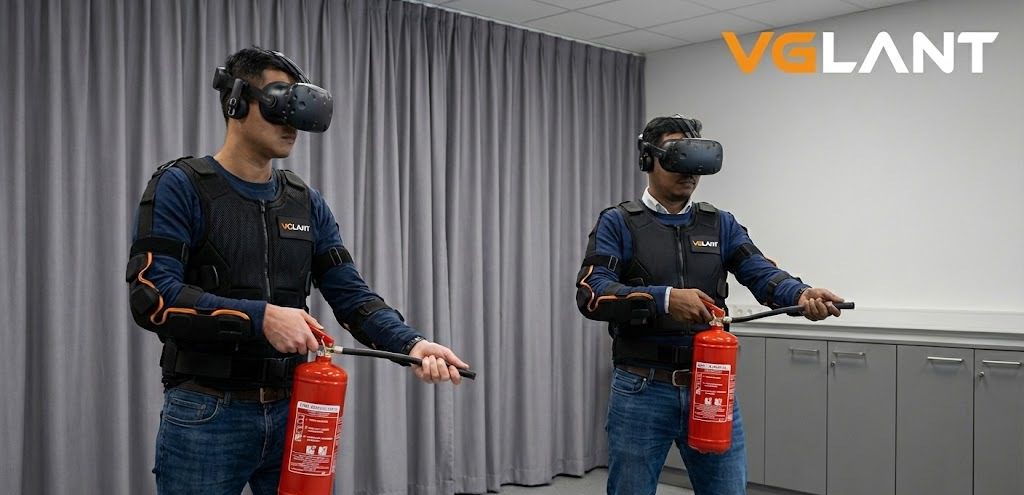
The biggest hurdle in fire safety isn’t knowing that you should use an extinguisher; it’s knowing how under pressure. VGLANT utilizes specialized equipment like the Tube VR Control Set, designed to mirror the weight and mechanical feel of a real fire extinguisher.
- Tactical Spraying: The system monitors spraying behavior and accuracy. Are they aiming at the base of the fire or just panicking?
- Procedure Compliance: Every step is tracked—pulling the pin, aiming the nozzle, and the sweeping motion. This build-up of muscle memory ensures that in a real emergency, the body acts before the mind has time to freeze.
3. First Aid & Disaster Response: Triage Under Stress
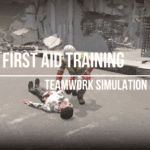
First aid training is often reduced to “checking a box” in a classroom. VGLANT transforms this into a high-stakes decision-making laboratory. In a virtual disaster zone, trainees must independently triage casualties.
- Autonomous Decisions: There is no instructor to look at for help. The trainee must decide: provide immediate aid to a burn victim or control the fire spread first?
- Simulated Pressure: The patient’s condition deteriorates in real-time. This creates stress inoculation, training the brain to remain analytical while the “panic center” is screaming.
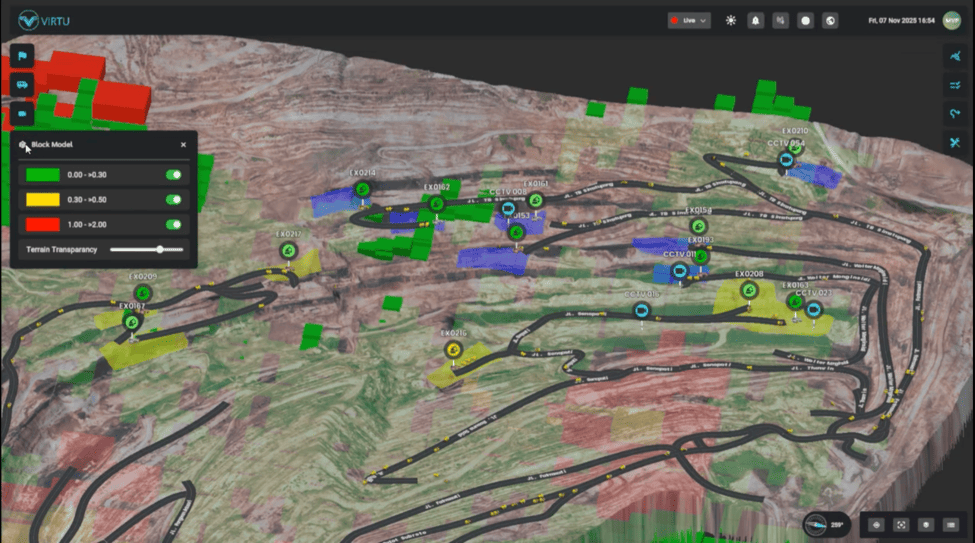
4. Tracked Data Records: The Administrator Dashboard
The true ROI of VGLANT isn’t just the training itself; it’s the Tracked Data Records. Every session is logged, providing an objective performance report that replaces subjective observation.
| Metric | Tracking Detail |
| Reaction Time | Milliseconds from fire appearance to first action. |
| Accuracy | Percentage of agent hit on the fire base vs. wasted spray. |
| Compliance | Step-by-step adherence to official safety protocols. |
The “All-in-One Pelican Case” Solution
For remote sites like mining concessions or construction zones, logistics are a nightmare. VGLANT’s portable All-in-One Pelican Case (including a high-spec PC and built-in monitor) allows for “Unlimited Sessions” anywhere. It’s a mobile training hub that turns any room into a high-tech safety laboratory.
The Bottom Line: From Knowledge to Action
VGLANT is not about watching a video; it’s about transforming dry knowledge into instinctive action. By removing the risk of training accidents and the cost of consumables, organizations can run rehearsals until safety is a reflex, not a memory. In the critical moments of a workplace emergency, that difference saves lives.