Training new operators to safely and productively run heavy mining equipment is one of the most consistent operational challenges in mining. A Komatsu 930E haul truck represents equipment investment measured in tens of billions of rupiah. An operator who damages transmissions, tires, or body during the learning process creates direct costs that add up quickly across a new operator cohort.
Conventional operator training addresses this reality imperfectly. Classroom instruction covers procedures and safety rules but doesn’t build actual operational capability. Shadow-riding with experienced operators exposes new operators to real conditions but limits hands-on practice. Initial solo operation happens in production settings where errors have real consequences for equipment and production targets.
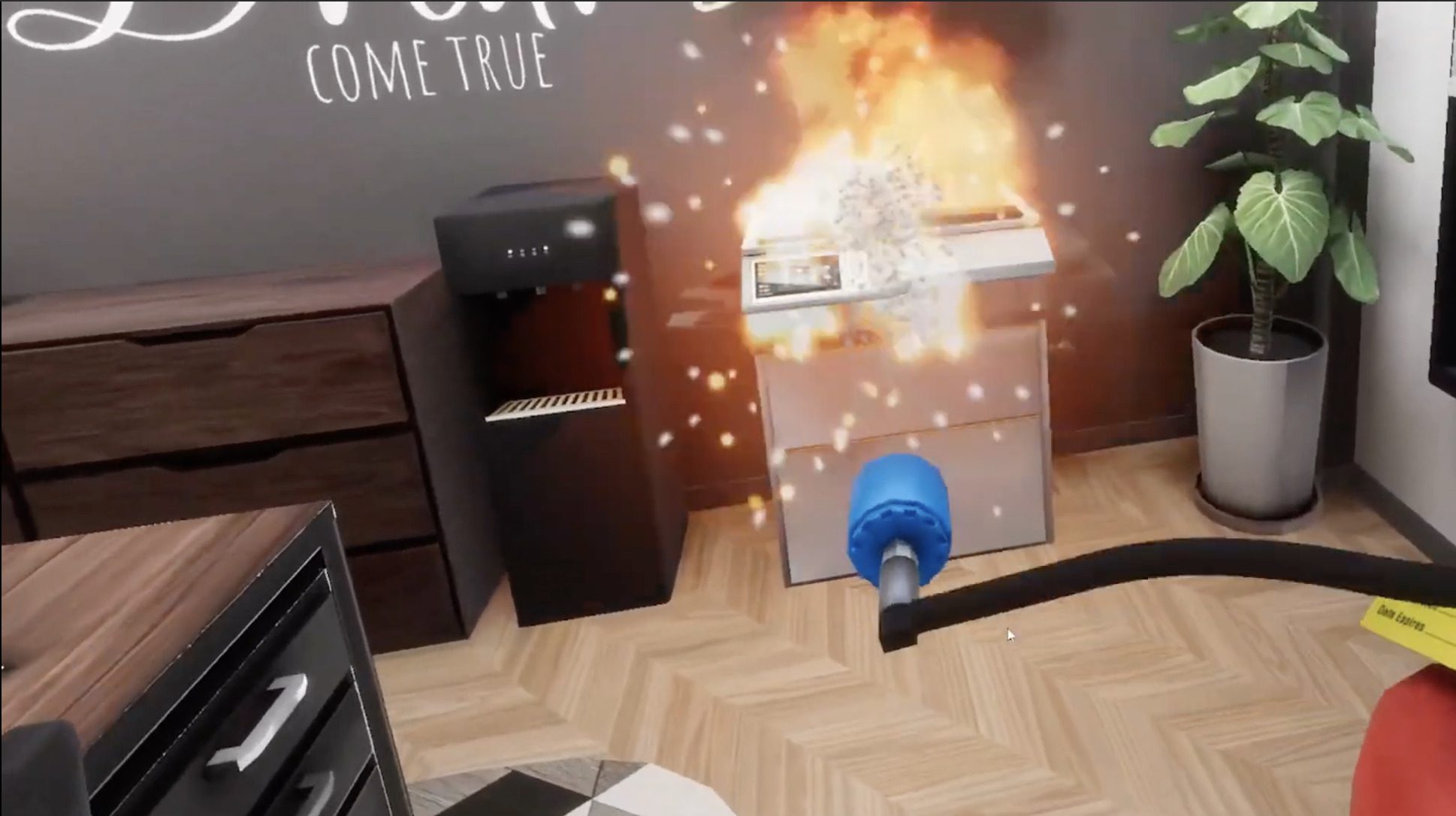
VR-based operator training changes this pattern by providing hands-on capability development before new operators enter actual equipment. Companies like Virtu have built specific VR training solutions for heavy duty mining vehicles used by Indonesian operators. Understanding what VR training actually delivers, and where its practical value emerges, matters for mining operations investing in operator development.
What Familiarization Actually Requires
Operating heavy mining equipment safely and productively requires several distinct capabilities that develop through different training approaches.
Cabin familiarity means knowing where every control, gauge, and display is located without conscious search. New operators who need to hunt for controls are slower, more distracted, and more likely to make errors during operational demands. Building cabin familiarity requires repeated exposure to the specific cabin layout of the equipment being operated.
Control operation sequences need to become automatic. Starting procedures, shifting patterns, dumping sequences, parking procedures — each involves multiple coordinated actions that need practice to execute smoothly. Conscious step-by-step execution isn’t fast enough for productive operation.
Situational awareness develops through repeated exposure to varied operating conditions. Loading area protocols. Haul road etiquette. Dump site coordination. Weather adjustment. Traffic management. These capabilities build through practice across many scenarios rather than through instruction alone.
Response to abnormal conditions requires exposure to conditions that don’t happen constantly. Equipment warning lights. Hydraulic pressure changes. Unexpected obstacles. Emergency situations. Operators need familiarity with these conditions before encountering them in production environments.
What VR Training Actually Delivers
VR-based operator training provides hands-on familiarization capability that classroom instruction cannot deliver and that using actual equipment for training cannot deliver efficiently.
Cabin walkthrough scenarios let new operators explore equipment interiors, identify controls, and practice operating sequences without any risk to actual equipment. Multiple new operators can develop cabin familiarity simultaneously without competing for equipment access.
Control sequence practice occurs at whatever pace individual operators need. Fast learners can accelerate through basic sequences. Slower learners can repeat sequences until execution becomes smooth. Neither pace disrupts production operations that would be affected if training happened on actual equipment.
Scenario variety exposes operators to conditions they might not encounter for months in actual operations. Rain conditions. Night operations. Traffic congestion. Loading area variations. Emergency conditions. All can be simulated on demand rather than waiting for actual conditions to appear.
Assessment becomes systematic rather than subjective. Supervisors observing operators in actual equipment form impressions that vary between observers. VR-based assessment tracks specific competencies against defined criteria, producing consistent evaluation across the operator cohort.
The Cost Impact of Reduced Damage
The primary economic argument for VR operator training is reduced equipment damage during the learning process. New operators cause damage — this is inherent to the learning process, not a failure of individual operators.
Estimates of damage costs during operator training vary by equipment type and operational context, but numbers commonly cited suggest damage during learning periods can reach hundreds of millions of rupiah per operator cohort. Transmission damage from improper shifting. Tire damage from poor path selection. Body damage from proximity errors. Hydraulic damage from operator errors on controls.
VR-based training doesn’t eliminate this damage entirely — operators still need real-equipment experience to complete their development. But VR training shifts a substantial portion of the initial learning to virtual environments where errors have no equipment cost. Real-equipment training becomes calibration and validation of skills already developed, rather than the primary learning environment.
Where Virtu Fits
Virtu developed VR training specifically for heavy duty mining vehicles, addressing the operator familiarization challenge that mining operations across Indonesia face. Training modules cover major vehicle components, walk operators around units for inspection familiarization, provide cabin familiarization for every button, lever, and display, and offer simulations of common operational tasks.
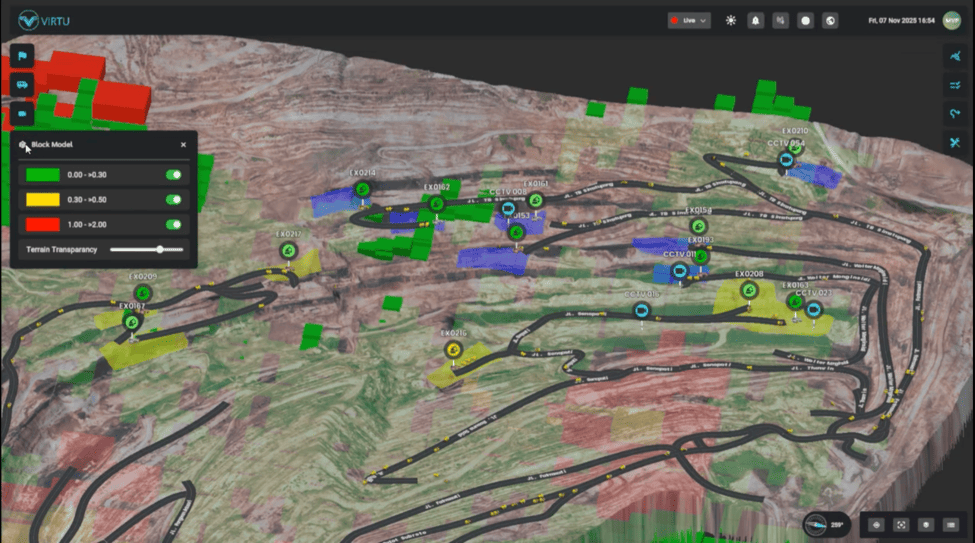
Results tabulate in back-end dashboards where supervisors can assess operator progress systematically. For mining operations investing in operator development, Virtu VR training represents capability specifically built for the operational realities of Indonesian mining.