Most workplace safety training has a predictable arc.
The session is announced. Staff attend — some willingly, some because attendance is tracked. A trainer works through the material. There’s a knowledge check. Certificates are issued. Everyone goes back to work with a faint sense of having done something responsible, which fades within two weeks.
Nothing about this arc produces genuine emergency preparedness. It produces documentation.
VGLANT was built on a different premise: that safety training only matters if it actually changes what people can do in an emergency. And building that requires a fundamentally different approach — one that the platform’s features are specifically engineered to support.
Starting From Where Your Organization Already Is
One of the practical barriers to meaningful safety training improvement is the perceived difficulty of the transition. Organizations have existing safety documentation — fire safety procedures, first aid protocols, emergency response SOPs — that took time and expertise to develop. The concern is that moving to VR training means starting over.
VGLANT’s approach addresses this directly. The platform’s implementation methodology begins with a consultation to assess your organization’s specific safety needs and identify training gaps. From there, existing safety documentation — your SOPs, your procedures, your compliance requirements — is converted into immersive VR scenarios. You’re not replacing your safety framework. You’re making it trainable.
This conversion process is one of the more underappreciated aspects of what VGLANT provides. The gap between “we have a procedure written down” and “our staff can execute this procedure under pressure” is enormous, and crossing it requires making the procedure something people practice rather than something they read. VR is the most effective medium for that transition currently available.
The Six Features That Define VGLANT’s Effectiveness
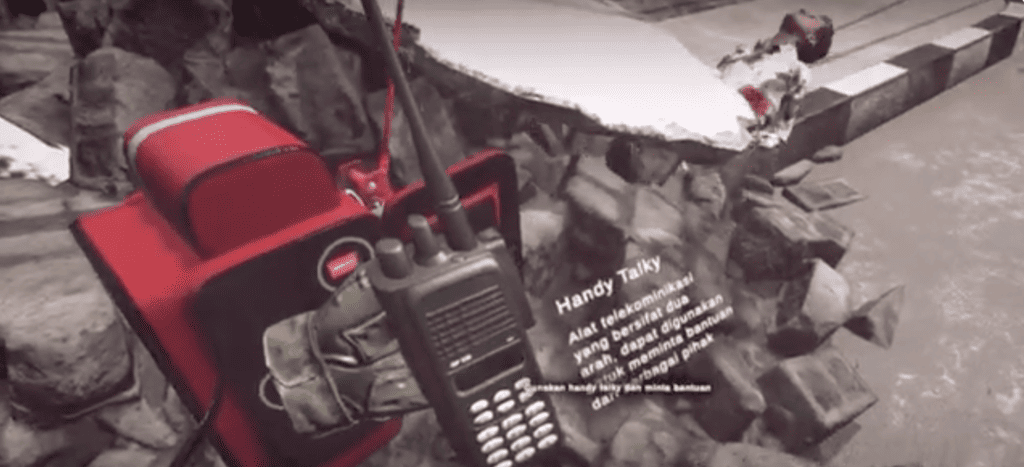
Engaging by design. The active learning structure of VR training is categorically different from passive formats. Trainees aren’t watching — they’re doing. They’re making decisions. They’re experiencing consequences. The scenarios include elements of variability and unpredictability that keep attention fully engaged in a way that a lecture or a video module structurally cannot. Staff who complete a VGLANT session remember what happened. They discuss it. They carry the experience into their understanding of real emergencies.
Muscle memory, genuinely built. The immersive quality of VGLANT’s simulations triggers genuine physiological response — the adrenaline, the elevated heart rate, the urgency that real emergencies produce. This isn’t a side effect. It’s a design feature. Skills practiced under this level of physiological arousal are encoded and accessed differently than skills practiced in calm conditions. The muscle memory that VGLANT builds is meaningfully closer to the muscle memory that emergency response requires.
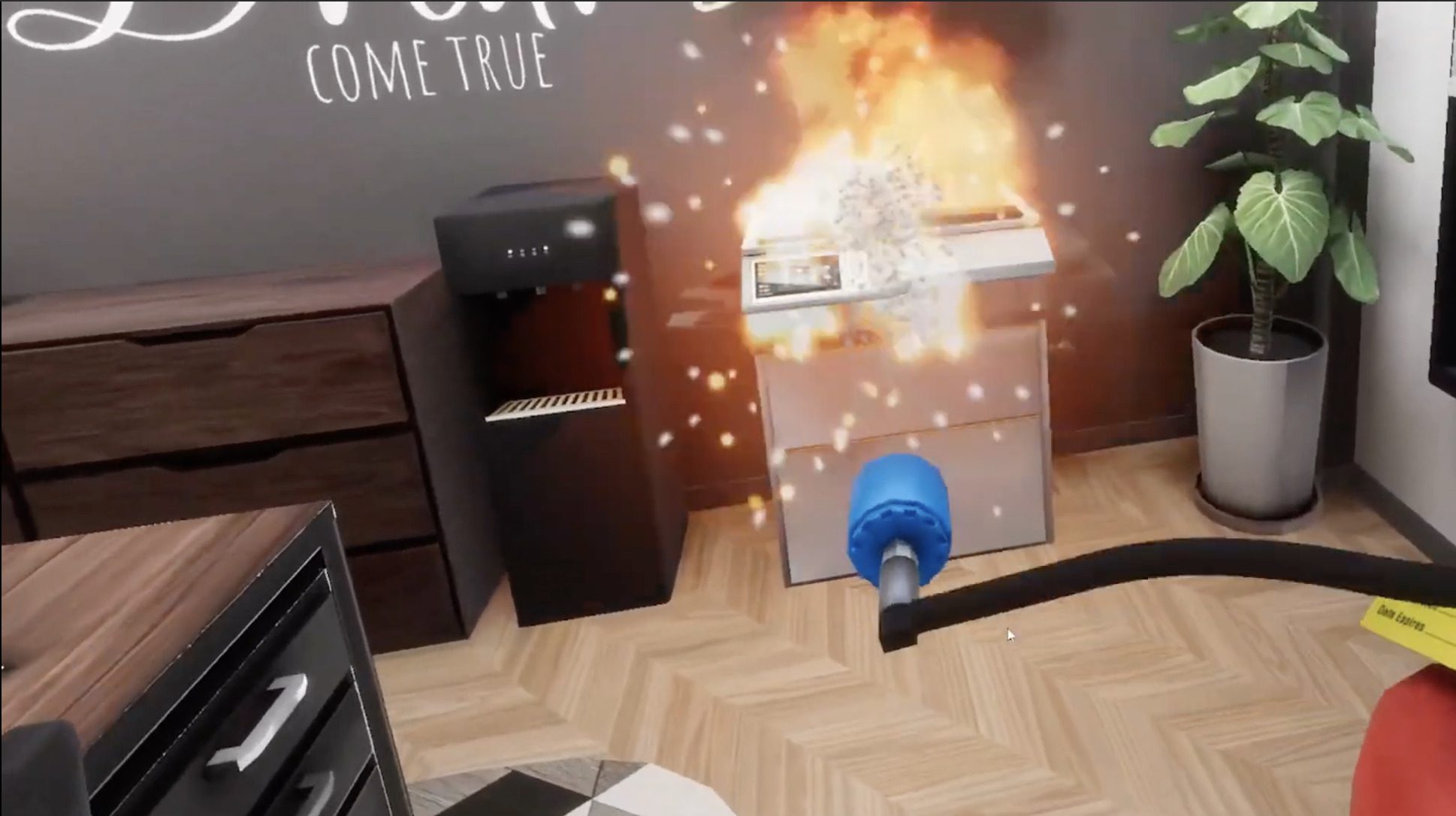
Zero exposure to actual hazards. Trainees practice handling fire extinguishers in front of fully realized virtual fires. They perform CPR on virtual casualties in virtual emergencies. They make wrong decisions and see what happens, then try again. None of this involves real flame, real casualties, real risk, or real logistical complexity. The scenarios that would be impossible or dangerous to replicate in live training — large building fires, multi-casualty events, confined space emergencies — are fully accessible in VR.
Significant time and cost efficiency. Traditional safety training requires instructor time, facility access, equipment setup, and coordination overhead that limits how frequently it can be run and how many trainees it can reach. VGLANT delivers consistent, high-quality training without scaling these constraints. The same session that requires two instructors, a training facility, and half a day of logistics in conventional format runs in minutes in VR, at any time, for any number of trainees.
Granular, real-time performance tracking. Every VGLANT session generates a detailed record: task completion time, decision accuracy, procedure sequence, reaction time at key scenario moments. This data feeds into a visual admin dashboard that gives safety managers immediate, meaningful insight into individual and team readiness. Not “attended training on this date” — but “this trainee selected the wrong extinguisher agent twice, takes an average of 23 seconds to initiate CPR, and has improved their PASS technique accuracy by 40% over the last four sessions.”
Contextual and personalized training. Traditional assessments measure whether trainees know the procedure in isolation. VGLANT evaluates whole-scenario performance — the assessment, the decision, the execution, the adaptation when conditions change. Simultaneously, training sessions can be targeted to specific gaps in individual or team skills, rather than delivering the same standardized curriculum to everyone regardless of their existing competence level.
VR Safety Training for Fire: Specific Capabilities
The fire safety module within VGLANT covers the full knowledge and skill set required for effective civilian fire response.
Trainees develop working knowledge of the fire chain and fire classification — the conceptual foundation that makes correct extinguisher selection logical rather than arbitrary. They learn to identify the appropriate extinguishing agent for each fire class through direct simulated experience, including experiencing what incorrect selection produces. They practice the PASS technique — Pull, Aim, Squeeze, Sweep — repeatedly until the sequence is automatic.
The admin dashboard captures extinguisher selection accuracy, technique quality, and time-to-suppression across sessions, giving safety managers specific, actionable data on where fire response competence stands across the organization.
VR Safety Training for First Aid: Specific Capabilities
The first aid module covers the emergency scenarios statistically most likely in workplace and public settings.
Trainees work through cardiac emergency response including CPR technique and AED deployment. They manage choking scenarios, severe bleeding, anaphylaxis, shock, and common injury presentations. Each scenario places the trainee in a realistic context — an office, a facility, a public space — where they must assess, decide, and act under simulated urgency.
Performance data captures response initiation time, procedure accuracy, and decision quality, providing a detailed picture of first aid readiness that no paper assessment can match.
The Assessment That Starts Everything
VGLANT offers a two-minute VR readiness assessment for organizations considering the platform — a quick questionnaire that evaluates current training gaps and provides immediate, personalized recommendations for how VR training can address them.
This starting point matters. The most effective implementation of VR safety training for fire and first aid isn’t a one-size-fits-all deployment — it’s a targeted program that addresses the specific gaps in your organization’s actual emergency readiness.
The assessment is the beginning of that conversation.
Take VGLANT’s two-minute VR readiness assessment and discover exactly where your organization’s safety training gaps are at https://vglant.com/