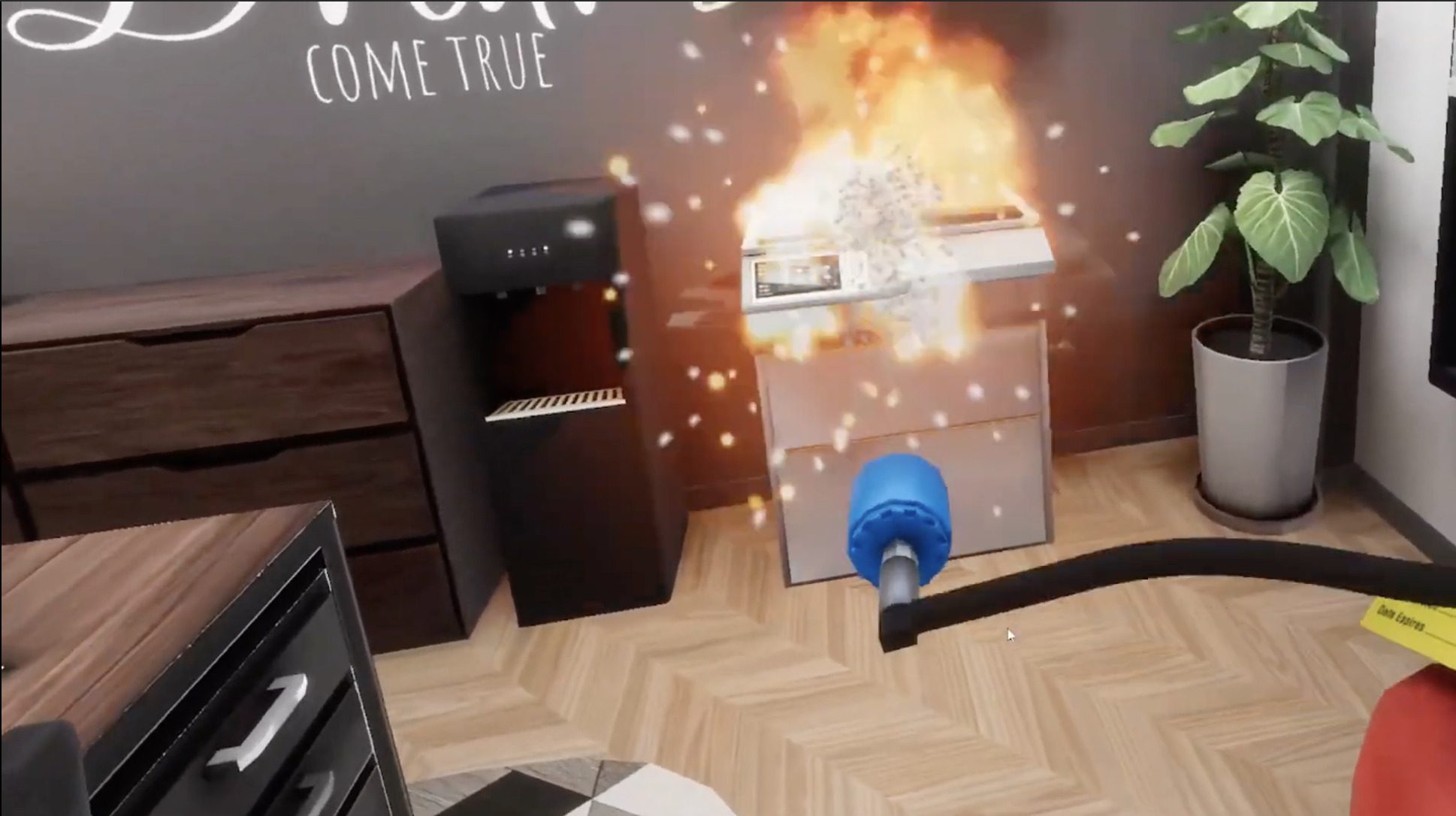
Picture the briefing before a typical narcotics warrant. The team has a few surveillance photos, maybe a rough floor plan sketched by an informant, and a list of who might be inside. Nobody really knows whether the people in there are asleep, armed, flushing evidence or about to run out the back.
That uncertainty is what makes drug raid training hard. And it’s also why it matters so much.
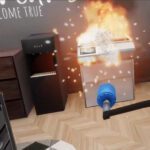
KOMINA includes a Drug Raid Operations scenario, rated high difficulty, covering high-risk entries into residential and commercial buildings with hostile threats. Below is a look at how it’s used, and why a virtual building can be more useful than people expect.

The Shoot House Problem
Most police units rehearse entries in a shoot house or in an empty building they’ve borrowed for the day. Both work, up to a point.
The trouble with a shoot house is that it never changes. After a dozen runs, officers know which door sticks and which corner hides the target. They’re no longer reading the building. They’re remembering it. A borrowed building is better, but it takes time to arrange and it almost never looks like the actual target.
Then there’s the debrief. Who went through the door first? Who forgot to check behind the sofa? How long did the team freeze at the stairs? After a live run, those questions get answered from memory, and memory under adrenaline isn’t great.
Rebuilding the Target House
KOMINA’s map editor goes straight at the layout issue. The structure builder lets instructors put up rooms and buildings with whatever dimensions they need. The terrain editor handles the yard, alley or street outside, and the asset library has the furniture, vehicles and clutter that make a room feel lived in.
So if an investigation unit has a floor plan of a two-storey house or a small warehouse, the team can walk through something close to it before the operation. And because it’s digital, it doesn’t stay the same. Lock a door. Add a back room. Move the stairs. The team learns to read buildings, not one building.
Who’s Inside
A raid scenario lives or dies on its occupants. KOMINA’s NPC spawner places AI agents and lets the instructor choose how they behave. Hostiles can be aggressive, defensive or set up in ambush. Civilians can be panicked, compliant or unpredictable.
Mixing the two is where it gets realistic. Real raids often turn up a partner, a child or a neighbour who happened to be visiting. An officer who’s only ever trained against “everyone is a target” will struggle with that.
Instructors can also change the threat level mid-session. Team cleared the ground floor too comfortably? Put someone waiting at the top of the stairs on the next run.
Moving Like It’s Real
Trainees don’t sit and use a controller. They walk through a free-roam space while full-body motion capture records their position and posture. The weapons are modified airsoft-based props with realistic weight, magazine changes and recoil. KOMINA’s armory also includes flashbangs with pin-pull simulation, which many entry teams use at the door.
And if an officer lingers in a doorway, the electric shockbelt lets them know about it. It’s a small jolt, but it’s a lesson that sticks better than a verbal correction.
What Comes Out of the Debrief
This is where VR earns its place. After each run, KOMINA’s after-action review gives a full 3D replay, heatmaps and scoring. The instructor can look at the order of entry at every doorway, which parts of each room were covered and which weren’t, how fast officers reacted to a hostile, and whether any civilians were wrongly engaged. Shot accuracy, team synchronisation and communication efficiency are there too.
Because the system keeps results across sessions, a unit can actually see whether its entry times and clearing errors improve over a training block, instead of just feeling like they’re getting better.
Still Not a Replacement
KOMINA presents VR as a complement to conventional training, and that’s the right way to see it. Officers still need to breach real doors, handle real equipment and practise on live ranges.
What VR adds is volume and variety. A narcotics team can run the same entry ten times in an afternoon, try a different approach each time, and get a measured record of every attempt. That’s hard to do any other way. To see the Drug Raid Operations scenario in action, get in touch with KOMINA for a demo.