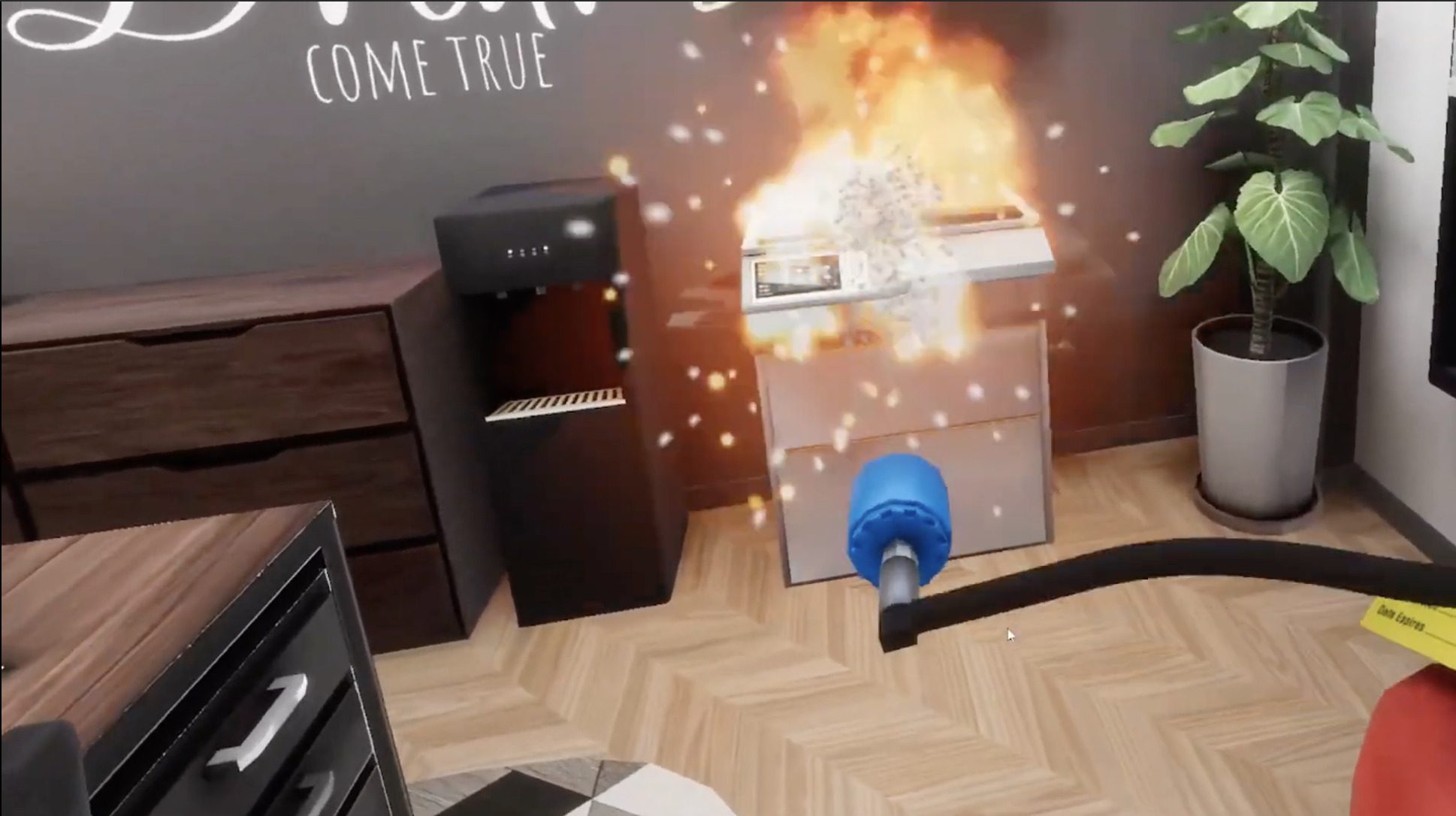
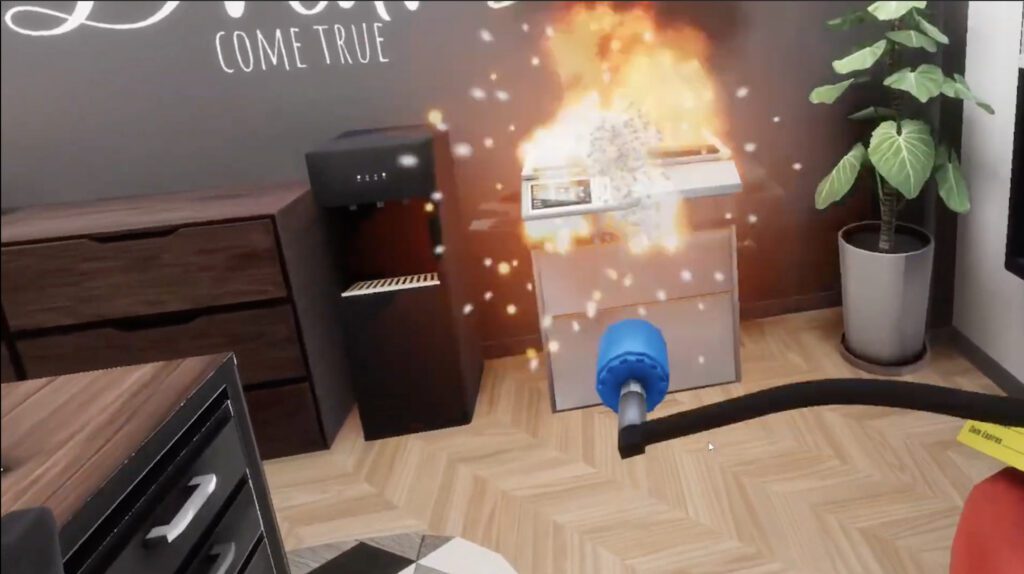
A workplace fire response depends on more than equipment. It depends on people who know their roles: who raises the alarm, who checks each area, who guides people to the exit and who counts them at the assembly point. This article explains how fire response roles are organised in Indonesian workplaces and how VR training can help those people practise.
The Legal Basis in Indonesia
Minister of Manpower Decree No. KEP.186/MEN/1999 regulates fire response units in the workplace (Unit Penanggulangan Kebakaran). It requires employers to prevent fires, provide fire response facilities, organise evacuation and hold regular fire drills.
The decree describes several roles within a fire response unit:
- Fire role officers (petugas peran kebakaran), assigned to areas of the workplace
- Fire response teams (regu penanggulangan kebakaran)
- A fire response unit coordinator
- A K3 expert specialising in fire response, depending on the risk level of the workplace
The number of personnel required depends on the size of the workforce and the fire risk classification of the workplace.
Typical Duties During a Fire
Although titles vary between organisations, common duties include:
- raising the alarm and reporting the fire
- using portable extinguishers on small fires where safe
- checking assigned areas, including toilets, storerooms and meeting rooms
- guiding people to exits and keeping them away from lifts
- helping people who need assistance to evacuate
- counting people at the assembly point and reporting missing persons
- communicating with the coordinator and with emergency services
Each of these tasks requires a person to make decisions quickly, often while other people are moving around them. Wardens must also know the location of extinguishers, alarm call points, exits and assembly points in their assigned area.
Why These Roles Are Hard to Train
Fire drills give staff practice in leaving the building, but wardens often have limited opportunity to practise their own decisions. A drill usually follows a known route, the alarm is expected and there is no real smoke or blocked exit.
Wardens also change. Staff move to new positions or leave the company, and new wardens may take on the role with little practical experience.
How VR Supports Warden Training
VR training allows wardens to practise their duties in a simulated version of a workplace. VGLANT offers fire evacuation and fire response among its VR safety modules, and lists features relevant to warden training:
- Randomised scenarios, so the location of the fire or a blocked route can change between sessions
- Zero risk, since trainees are not exposed to real fire or smoke
- Trackable performance, with metrics such as task duration, reaction time and actions taken
- Contextual assessment, where trainees are assessed on the whole scenario rather than on individual answers
For a warden, a scenario can require checking several rooms, choosing an alternative exit when the main route is blocked and deciding whether to use an extinguisher or leave.
Using a Model of the Actual Workplace
VGLANT’s bespoke services include converting existing SOPs into VR scenarios. For fire response, this means the training can follow the organisation’s own evacuation procedure, alarm signals and assembly points. VGLANT’s four-step process is assess, convert, deploy and track, then analyse and scale.
Reviewing Performance
Recorded metrics allow the fire response coordinator to see:
- how long each warden took to complete their checks
- whether any areas were missed
- which exit was chosen when the main route was unavailable
- whether extinguishers were used appropriately
This information can guide refresher training and help confirm that each area has a prepared warden. It can also show when a newly appointed warden is ready for the role.
Combining VR With Drills
VR training does not replace the regular fire drills required under KEP.186/MEN/1999. Drills test the whole organisation, the alarm system and the real escape routes. VR training adds individual practice for wardens and response teams between drills, including situations that are difficult to stage in a drill.
Summary
Effective fire response relies on wardens and response teams who know their duties. VR training gives them a safe way to practise those duties and gives coordinators a record of performance. Organisations interested in VR fire response training can contact VGLANT to discuss their procedures.