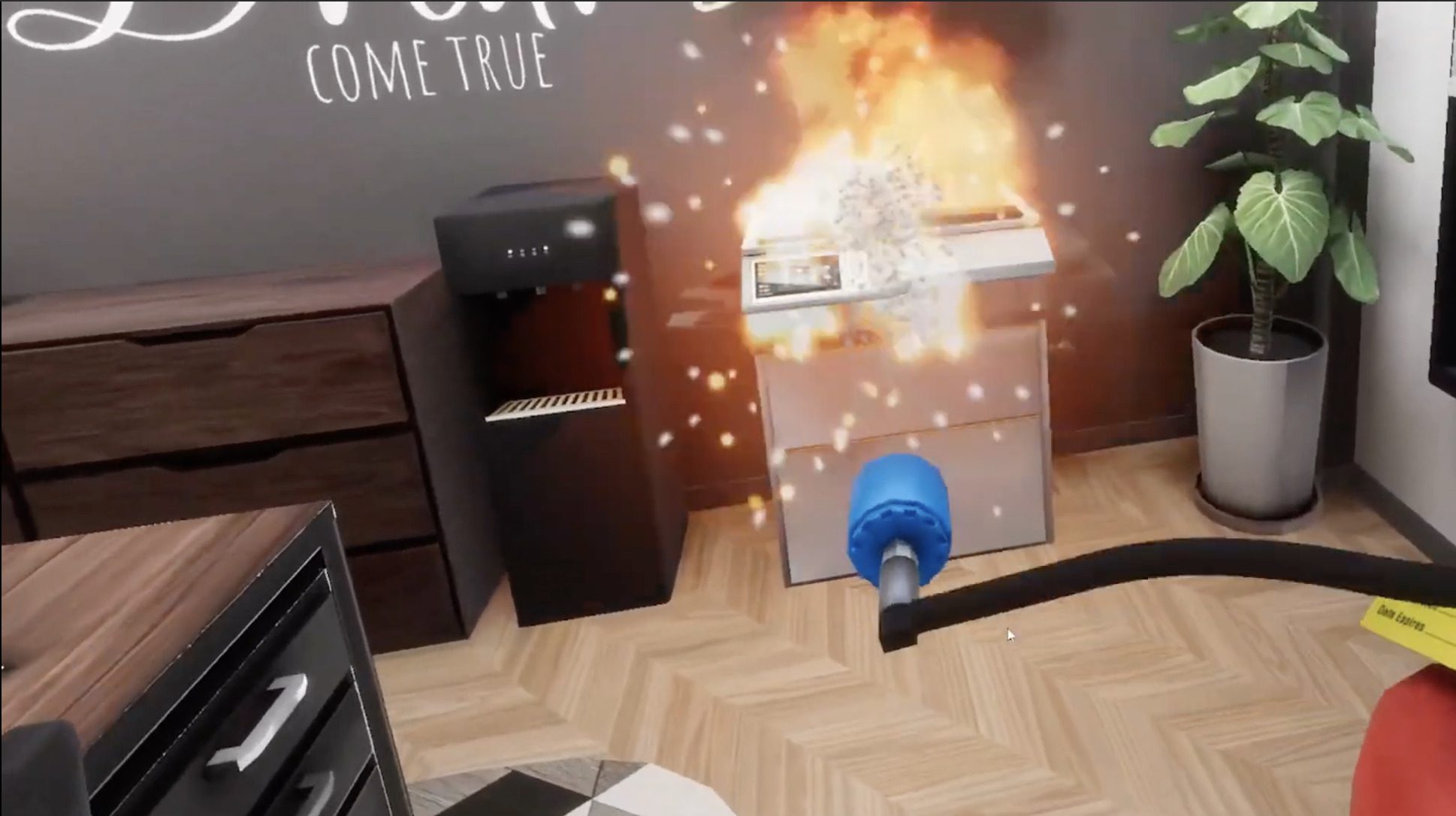
A visual-only digital simulation has a specific failure point: the moment a trainee’s hands don’t feel what their eyes are telling them is there. Reach for a weapon that has no weight, and some part of the brain quietly flags the whole exercise as not-quite-real. Once that happens, the stress response that makes training useful in the first place starts to fade too.
Physical props exist to close that gap. A prop weapon built to match the actual dimensions and weight of standard equipment isn’t a visual prop — it’s a functional one. It has to sit in a holster the same way, sling the same way, and most importantly, get heavy in the same way after twenty minutes of holding it up. That last part matters more than it sounds. Fatigue changes decision-making. A trainee whose arms are tired makes different choices at the fifteen-minute mark than they did at the two-minute mark, and if the prop doesn’t carry real weight, that fatigue curve never shows up in the simulation at all.
The same logic applies to vests. A weighted vest forces the same postural habits a trainee would use with real gear — leaning into a doorway a certain way, bracing against a wall a certain way — because the body is compensating for actual mass, not miming a motion it thinks might look right. That compensation is unconscious, which is exactly why it has to be triggered by something physically real rather than assumed by the software.
Put the visual and physical pieces together and the simulation stops asking a trainee to pretend. It asks them to just react, the same way they would with the equipment they’ll actually be using outside a headset. That’s the entire argument for building hardware this specific instead of leaning on graphics alone.
For a closer look at how this hardware integrates into daily training, visit komina.co.