
The First Day Problem
Virtu built its VR onboarding module around a specific problem: a new recruit’s first day on a mining site is usually spent absorbing an enormous amount of unfamiliar information at once — site layout, equipment locations, hazard zones, muster points, the general shape and scale of an operation that can be genuinely disorienting to someone seeing it for the first time. That’s a lot to process while also trying to make a good impression and follow instructions correctly, and it’s a specific reason new personnel are statistically more exposed to incidents in their first weeks than experienced staff working the same roles.
Learning a Site Before Standing on It
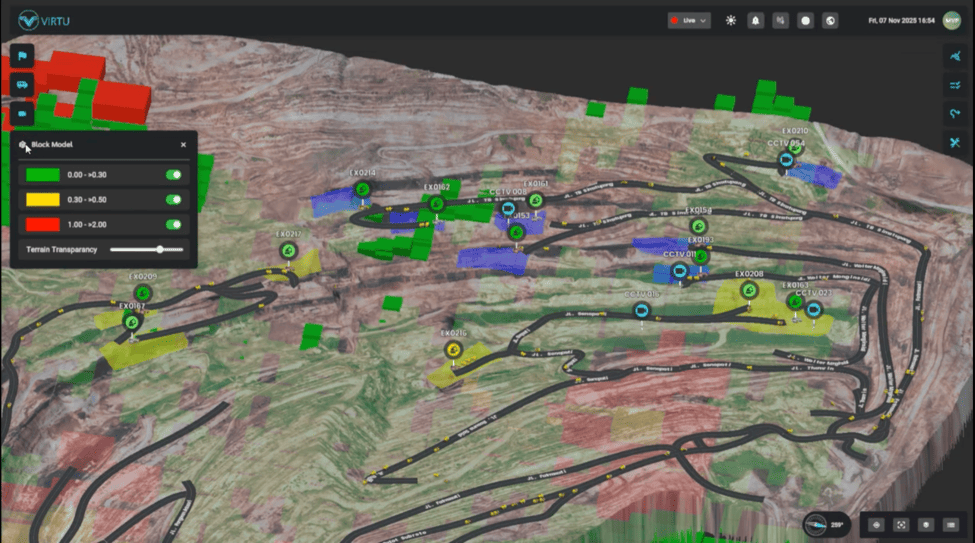
VR onboarding addresses this by moving part of that first-exposure learning curve earlier, before a recruit ever physically sets foot on the active site. A new hire can walk through a virtual model of the site’s actual layout — access routes, equipment staging areas, marked hazard zones, muster points — repeatedly, in a setting with no time pressure and no risk, before their first real shift. By the time they’re physically on-site, the general shape of the place is already somewhat familiar, which frees up attention for the things that genuinely do require being physically present to learn.
Why Familiarity Changes Attention, Not Just Confidence
The value here isn’t just reduced first-day nerves, though that’s a real secondary benefit. It’s about where a recruit’s attention goes during those first critical days. Someone navigating an entirely unfamiliar site is spending a meaningful share of their attention just figuring out where they are and where they’re supposed to be, which is attention not available for noticing an actual hazard nearby. A recruit who already has a working mental map of the site from VR onboarding has more attention available for the things that actually matter in the moment — which is a meaningful safety benefit, not just a convenience.
Consistency Across a Growing Workforce
VR onboarding also solves a consistency problem that in-person site walkthroughs struggle with. A live walkthrough depends on which supervisor is leading it, how much time is available that day, and what happens to get mentioned versus overlooked. A VR onboarding module covers the same site information the same way for every recruit, every time, which matters more as a workforce scales and a site can’t guarantee every new hire gets an equally thorough, unhurried in-person orientation.
Setting Up Every Later Stage of Training
Site familiarization through VR isn’t a replacement for hands-on training that follows — equipment operation, task-specific procedures, supervised practical experience all still matter enormously. What it does is remove one specific source of first-day cognitive overload, so the training that follows can build on a recruit who already knows where they are, rather than one who’s still figuring that out while trying to also absorb everything else.
Learn how Virtu approaches VR onboarding for new mining personnel at virtu.co.id.