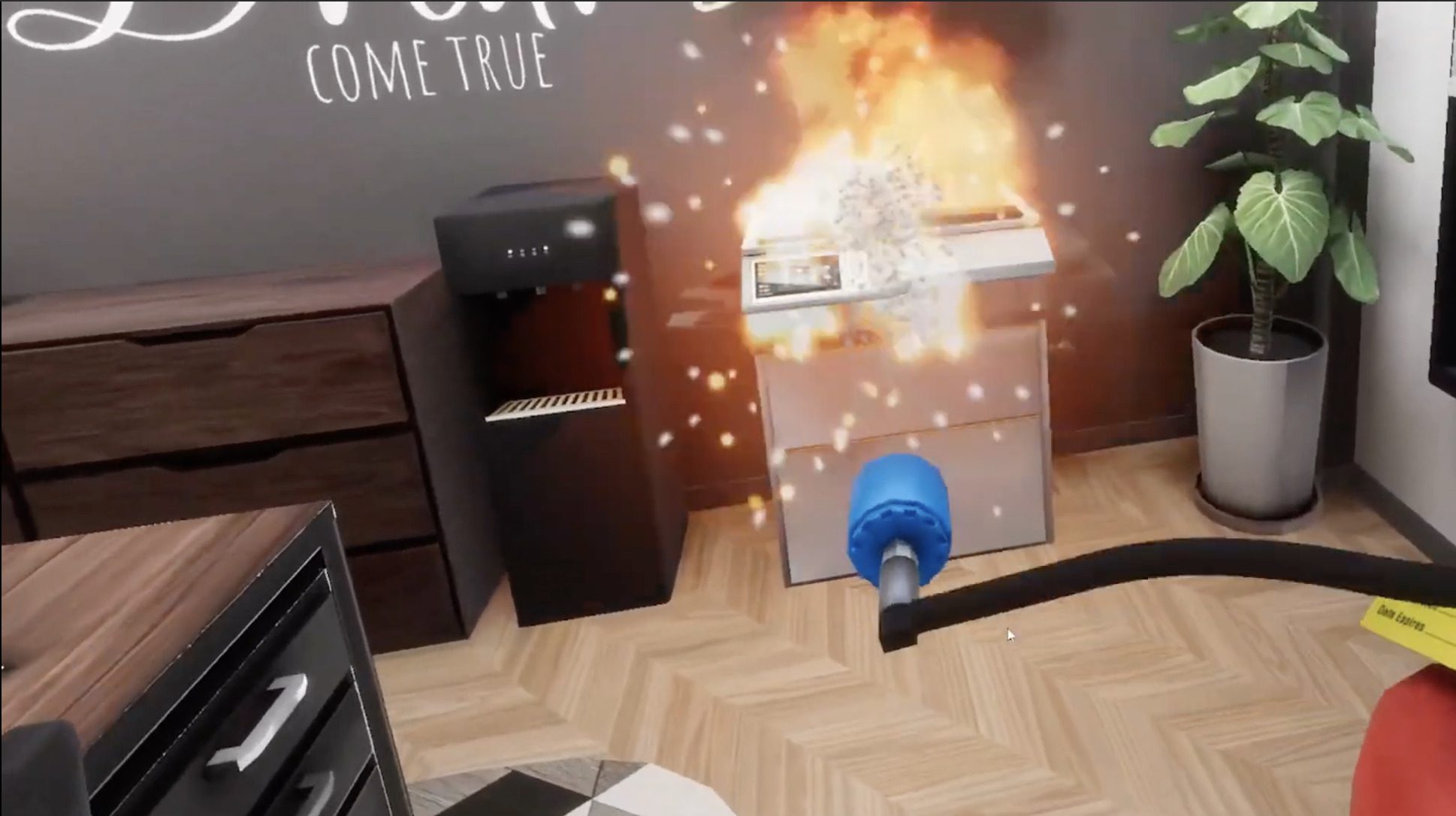
The Assumption Most Evacuation Plans Make
Standard fire evacuation training generally assumes everyone involved can move at a normal pace toward an exit without assistance. In practice, that assumption doesn’t always hold. A colleague may freeze under stress. Someone may have a temporary or permanent mobility limitation. An injury sustained just before or during the evacuation itself can turn a routine exit into something that requires active assistance from whoever happens to be nearby — and that person is rarely someone with any specific training in how to help. That improvised moment, decided by whoever is closest rather than whoever is prepared, is exactly what VR safety training can rehearse before it happens for real.
Training the Helper, Not Just the Route
As a leading provider of immersive VR training solutions, VGLANT’s fire evacuation scenarios include specific variants built around this exact situation: a colleague nearby who needs active help to evacuate safely, whether that’s due to panic, injury, or a mobility constraint. The trainee isn’t just navigating their own exit — they’re making decisions about how to assist someone else without slowing either of them down more than necessary, or making an already dangerous situation worse.
That’s a meaningfully different skill than personal evacuation competence. It requires quick assessment of what kind of help is actually needed, clear communication under stress, and a route decision that accounts for two people moving at a different pace than one.
What Gets Measured Differently Here
Session tracking for this scenario looks at more than individual evacuation time. It captures how quickly a trainee recognizes that a colleague needs help, what kind of assistance they attempt, and whether their overall evacuation decisions adjust appropriately once a second person’s needs are factored in. A trainee who defaults to their own optimal route without adjusting for the person they’re assisting is a specific, correctable pattern that this scenario is built to surface.
Building Toward a More Complete Evacuation Program
Transforming fire evacuation training with virtual reality technology means covering the version of the drill where the plan doesn’t go exactly as expected — including the version where getting out safely depends on more than just knowing your own route.
Learn about VGLANT’s evacuation training scenarios at vglant.com.